…She’d See God Move Mountains

This past summer, I was on the verge of quitting my job. Like, walking-away-without-a-plan quitting. My internal gas tank was completely empty.

Let me pause here to say that I really do like my job. I love that God uses the American Red Cross as a medium through which I can love and serve like Jesus. (Want to learn more about what I do in Disaster at the American Red Cross? Check out “Humberto, Imelda and Pre-Landfall Disaster Response.”)
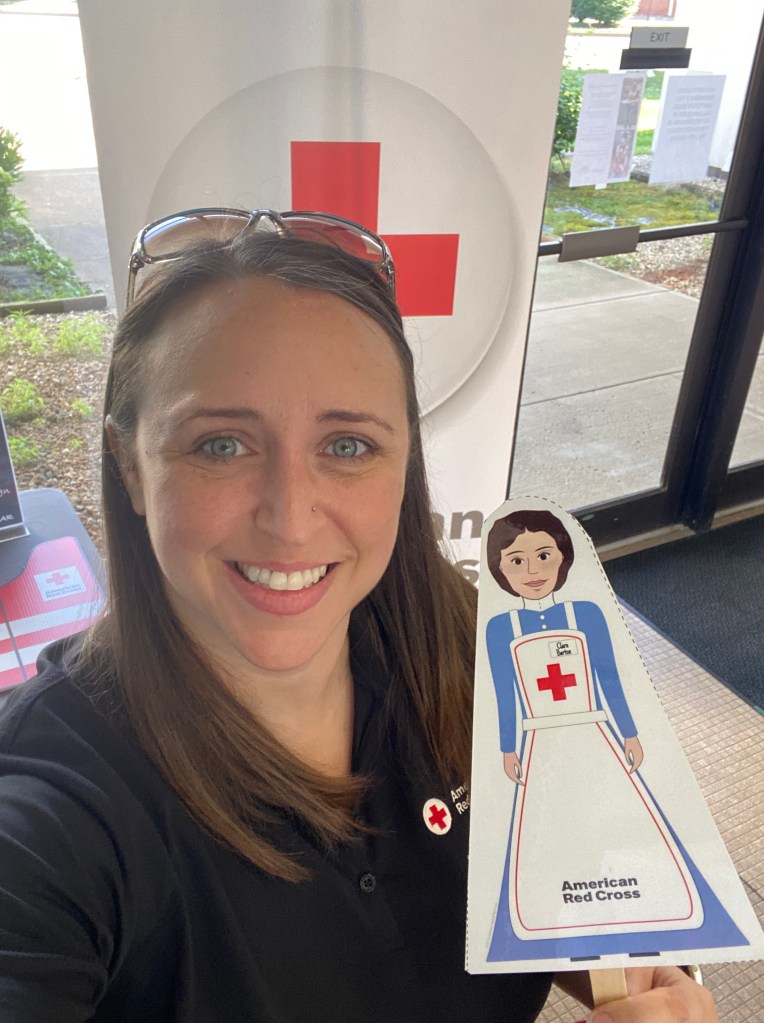
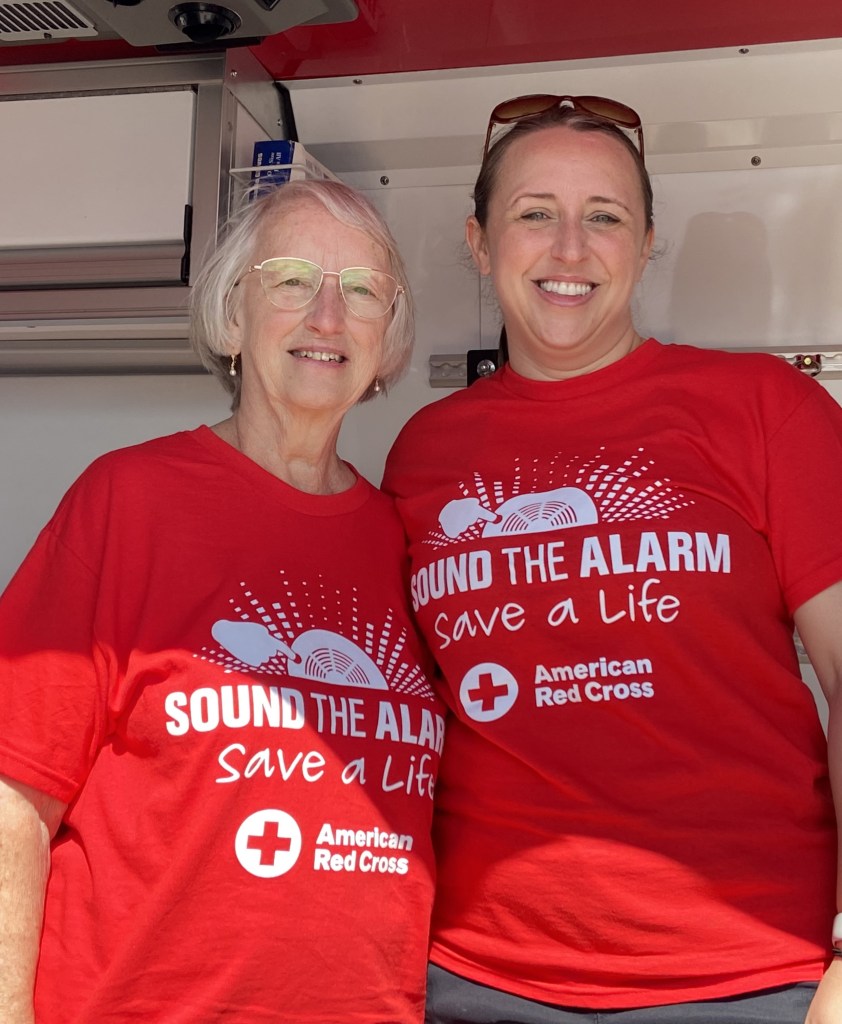
But occasionally I go through one of these “episodes.” I don’t know what else to call them, but I know they are born out of burnout, compassion fatigue, extreme emotional exhaustion and exacerbated chronic illness symptoms. Every time I have experienced one of these episodes, I have prayed and asked God to open a door and move me to another job. A less stressful job. A job more compatible with my chronic illness symptoms. And every time, He has said the same thing.

Stay.

I know He hears my prayers when I have no words, so He has definitely heard every sigh when that’s the answer He gives. Every time I plead my case to Him, the end result is the same: I submit and say, “If this is where You want me to be, I’ll stay as long as You want me here.”  

The episode I had this past summer was different. It felt bigger than the others, more desperate. Looking back, I think this episode was also compounded by #spiritualwarfare because what happened when I obeyed and stayed instead of jumping ship has had a huge impact on my faith.

It started when we stood up a disaster relief operation in mid-February for flooding in Southern West Virginia. Not only are operations stressful and demanding, but the impact of knowing others – in this case, West Virginians – were affected, is heartbreaking.
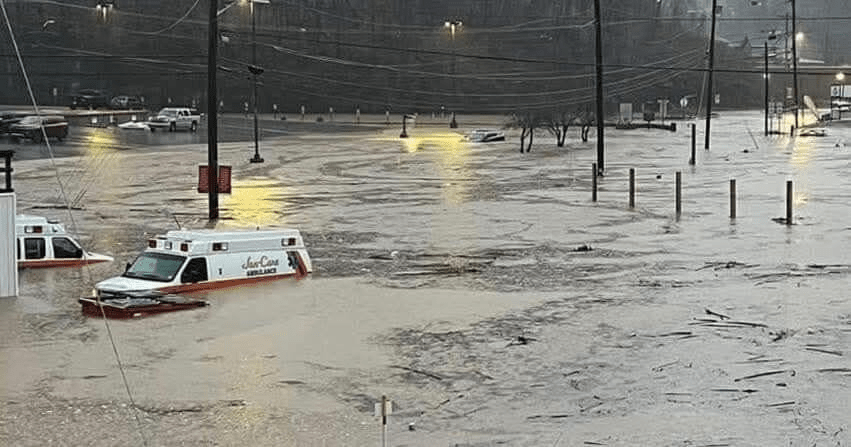
February 2025 flooding in Welch, WV. Photo and story can be found on https://www.wvnews.com/.

I had been to the town of Welch, WV, in June 2024 on a mission trip to assist in cleaning up buildings on the main street that had been damaged from a previous round of flooding. The 2025 flood was a personal hurt for me because I had met some of the people who had moved to Welch and put everything they had into those buildings and starting new businesses and faith-based operations to help the rural community.

It was during the Southern West Virginia disaster operation that my dad was hospitalized for pneumonia and my cat, Miles, had a life-threatening health episode. Did I mention stress exacerbates #IdiopathicHypersomnia symptoms?

On Father’s Day, flash flooding in both Wheeling (Ohio County) and Fairmont (Marion County), WV, led us to stand up a second disaster operation. In Wheeling there were fatalities, adding a different level of complexity to the urgency of providing help on the ground.
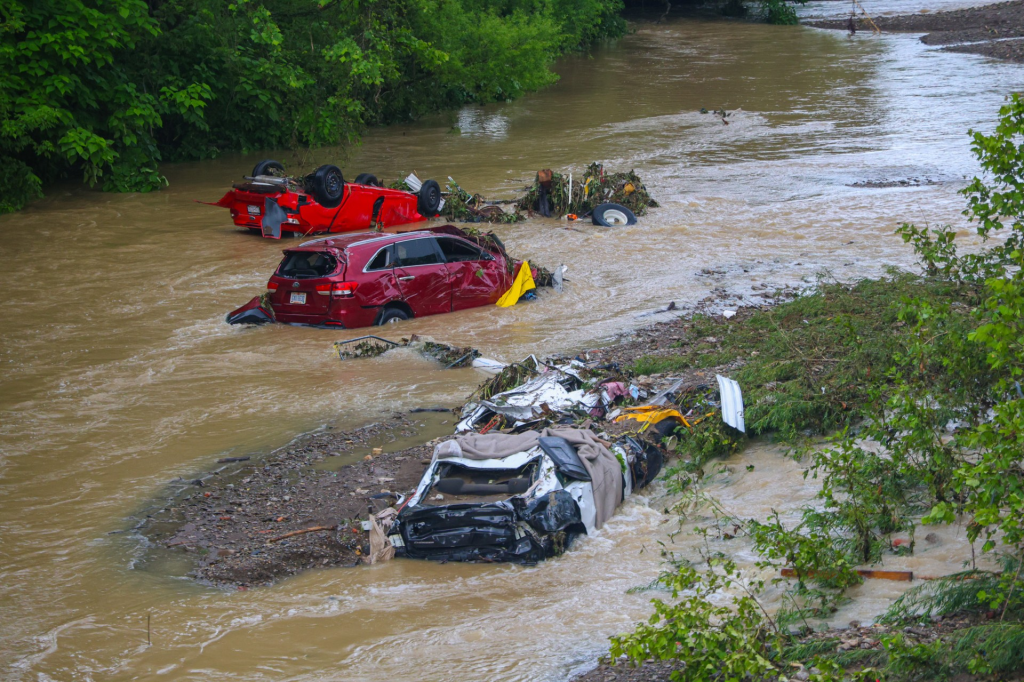
Aftermath of the flash flooding in Ohio County, WV, on Father’s Day 2025 that took the lives of 7. Photo and story can be found at https://wvmetronews.com.

Then, on July 4, I woke up to news of the Texas flash flooding that took at least 135 lives, including children attending Camp Mystic.

Through my tears, I had that same conversation with God again, and again I got the same answer.

Stay.

What I did next is what I think Papa God was waiting for me to do all along. I said, “Okay, but I need your help. This job is too hard. My IH is too hard. I can’t do it by myself.”  

“By myself.” That was part of the problem. I was trying to do this job God wanted me to do without Him. I had asked God for this job, but I had never invited Him into it. I don’t think when He put me in this job He intended for me to carry it all on my own because He knew it would be a lot. And as soon as those words were out of my mouth – “I need your help” – I now know He immediately rolled up His sleeves and got to work.

I didn’t realize until just a couple of weeks ago what God had been working on for me between July and November. There are three big things in particular – mountains He moved – that stick out to me when I think about how He heard me and He responded. First, I realized He had grown the size of my volunteer team. This is no easy feat. There is a shortage of volunteers, and the work we do on my team can be very complex. He has given me smart, willing, compassionate volunteers to help me carry the load every day, which is helpful to me in my chronic illness and a benefit to the region – and nation – when we need to respond to disaster.

Second, He provided me with the only medication that has had any kind of impact on my Idiopathic Hypersomnia. I needed that wakefulness to be able to train my new team members. I have literally been on every medication, including Xywav, in the last three years, and this is the first time I’ve experienced any level of relief.

Third – and this is the big one – He literally rerouted every hurricane in the 2025 season that was heading for the East Coast.

You read that right.My God moved the Mount Everest of mountains for me. He did what I never even entertained as a possibility when asking for help to get through hurricane season. He made what was expected to be an above average season the opposite.

“…Even the wind and waves obey Him!” (Matthew 8:27, Mark 4:41, Luke 8:25)

There has not been one single hurricane that has made landfall on the East Coast this hurricane season. Yes, Tropical Storm Chantal made landfall, but it wasn’t a hurricane. Yes, Hurricane Erin came close enough to cause beach erosion, strong surf, rip currents and coastal flooding, but it didn’t make landfall. Yes, Hurricane Melissa made landfall, but it was in Jamaica, not the U.S., making it an International Red Cross response. Even Imelda, who appeared to be on track to make landfall on the East Coast near North Carolina on the one-year anniversary of Hurricane Helene, made a sharp right out at sea like the others.
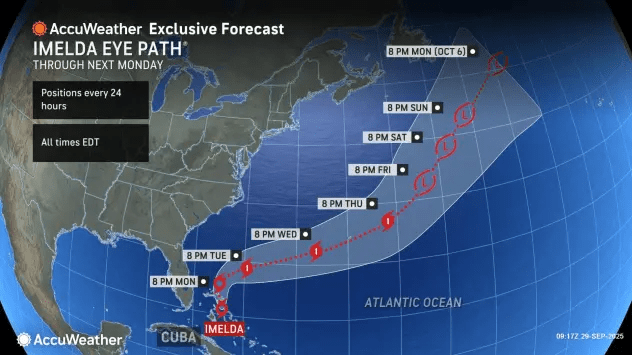
Photo of Imelda path from https://www.accuweather.com.

If you google the reason why most of this year’s hurricanes turned right and stayed out at sea instead of making landfall, you’ll see articles and videos explaining that dips – or troughs – in the jet stream have helped push the tropical systems out to sea and away from the East Coast. If you google why Imelda turned away from North Carolina, you’ll see credit given to Hurricane Humberto and the Fujiwhara effect.

But I know the truth. There was a mountain called Hurricane Season standing in my way, and when I asked God for general help, He got specific about clearing a path.

I can hear you now. “Jenn, you really think God diverted the entire hurricane season for you? Seriously?”

Serious as a Cat 5.

I think God answered a lot of people’s prayers by diverting those storms because a lot of people are tired, and a lot of people still need time to recover from last year.

But I also believe He did it for me. I asked for help, and He heard me and He answered.

Trust me, kid. I’ve got you.

If I had left my job based on my emotions instead of obeying and staying, I would have missed out on seeing God do big things. Faith-changing things. Worship-inspiring things. Every day I listen to “What an Awesome God” by Phil Wickham because it expresses what I feel after seeing what He has done. “Fire in His eyes. Healing in His veins. Everywhere His glory on display. Take a look at the stars. He can name ’em all. Before His throne every knee falls. The demons have to run, the angels have to praise.Even the wind and waves obey.”

I have a confession. My faith in God following through for me has always been weak. Not because I don’t think He can but because I think why would He do for me when there are so many others hurting more than I am. If I had left my job instead of listening to Him, I would not have seen what He is willing to do for me. I would not have seen how truly big my God is. How awesome my God is. It is emboldening and exciting and beautiful to see what He can do. And I understand now when people say that if you trust God, He will work things out in ways that are bigger and better than you can ever imagine.

I literally can’t wait to see what He does next.


Did you know I have a Spotify list for the songs I mention in my blog posts?

Look for Little Did She Know on Spotify and follow along!


Song Recommendation for the Week:

Don’t Stop Praying” by Matthew West

“What’s your impossible? You’re ‘I need a miracle?’ What’s got you barely hanging by a single thread? …Don’t stop believing ‘cause mountains move with just a little faith. And your Father’s heard every single word you’re saying, so don’t stop praying.”
Humberto, Imelda and Pre-Landfall Disaster Response

This time last week, I was staring down Hurricane Humberto and the expected impact area of what would become Hurricane Imelda on the NOAA Hurricane Center website. For Florida, Georgia, North Carolina, South Carolina and Virginia, it would be summed up best by the catch phrase of my disaster coworker, Todd:

“It’s not great.”

In case you don’t watch the news or the weather, #HurricaneHumberto in the Atlantic is credited with pulling #HurricaneImelda away from the East Coast, preventing landfall that would have impacted multiple states. That’s not to say the Bahamas were not impacted or that those coastal states would not end up seeing impact from the storm by way of coastal flooding and dangerous waves, but it could have been a whole lot worse.  

I smile and think of the conversations I had with God late last week about how awesome it would be if He diverted Imelda and prevented loss of life and loss of homes and businesses. So while Humberto gets the credit for derailing a disaster on the East Coast, I know the truth:

#GodDidIt

But answered prayers and miracles and those special conversations with #PapaGod will have to wait because that’s not what I want to share with you right now. What I want to share with you is what it looks like when the American Red Cross’ Disaster Cycle Services line of service prepares for hurricane landfall and pre-landfall deployment. Unfortunately, I think one of the Red Cross’ best kept secrets is Disaster Cycle Services. So, I’m going to let you in on this secret with the hope that word will get out and more people will want to join this diverse band of humanitarians and help those in need alongside of us.

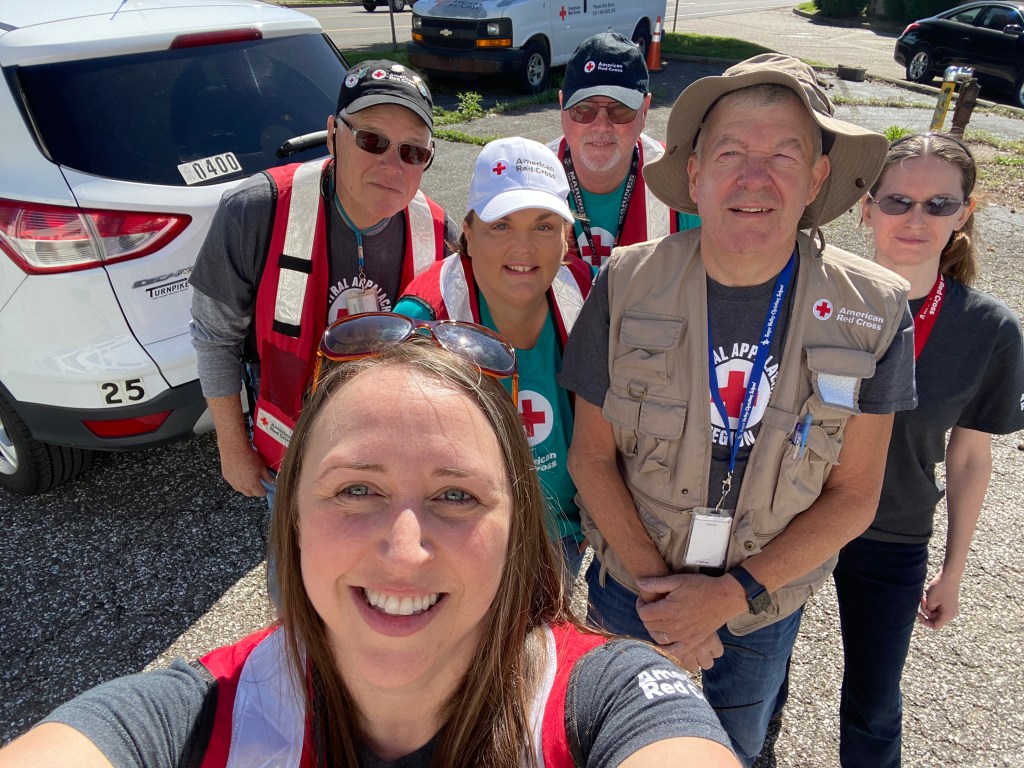
Central Appalachia Region volunteers on an operation in Huntington, WV.

Every morning, Disaster Cycle Services team members from all over the U.S. get on a sync call with our national disaster leadership to discuss potential threats and current humanitarian responses. Early last week, conversations were being held about Hurricane Humberto and what would become Hurricane Imelda. From what I understand, hurricanes can spin up and strengthen very quickly due to the warm temperatures of the Atlantic Ocean. It’s hard to know a week out if and how a disturbance will develop, but Invest 94L – which would become Imelda – had us in full-on preparedness mode.

Note: According to The Weather Channel, “An invest – short for ‘investigation’ – is a naming convention used by the National Hurricane Center (NHC) to identify features they are monitoring for potential future development into a tropical depression or storm.”

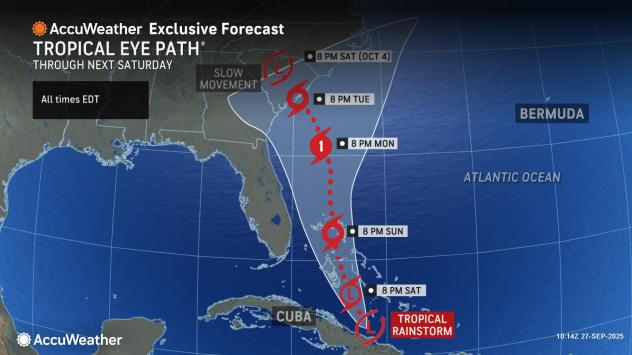
This was the type of image that had me worried last week: (Credit: Accuweather on 9/26):

By Thursday of last week, the American Red Cross had five disaster operations standing up ahead of Imelda’s anticipated landfall – Florida, Georgia, North Carolina, South Carolina and Virginia – and the Disaster Workforce Engagement Teams in regions all over the U.S. were working on putting trained Red Cross disaster responders on standby for pre-landfall deployment to travel ahead of the storm and prepare for impact.

Rabbit Trail: I am the Disaster Workforce Engagement Manager (DWEM) for Central Appalachia Region (CAR). CAR is compromised of all 55 West Virginia counties and 22 counties in the border states of Kentucky, Ohio, Virginia and Maryland. One of my responsibilities as DWEM is having a national disaster deployment team in place and a deployment plan ready to respond to whatever happens, whenever it might happen.

Pre-landfall deployment is exactly what it sounds like: we send trained disaster responders to the regions where impact is expected by a major storm. We mobilize our workforce before any travel stops are caused by incoming bad weather so we can prep evacuation shelters and get our resources in place. When the preparedness tasks are done, the responders hunker down and wait out the storm. Once the storm passes, the needs of the area are assessed with local community partners, and our Red Cross workforce begins delivering the mission of help and hope.

The work of the Disaster Workforce Engagement/Deployment Team never stops – we are always in a posture of preparedness for response. This is so that if a disaster occurs at any time, we are ready to mobilize disaster responders to impacted communities. With pre-landfall preparedness, we check the availability of all of our trained responders, and if they are able to deploy, we put them on alert or standby.

When the Deployment Team gets the go to mobilize any responders who are on alert, we confirm those responders can leave by the next morning and go over the assignment location and hardship codes with them. Hardship codes are any challenges the volunteer might face on that assignment, like no electricity, no running water, travel difficulties, and no immediate access to health care.

The Deployment Team members provide as much info as we can to our responders so they can make an educated decision about whether the deployment opportunity is right for them. If they agree to go, we instruct them on next steps, like finishing their pre-assignment health questionnaire (responders must be healthy and physically able to deploy) and booking their travel through the Red Cross’ travel agency. In Central Appalachia, every responder who deploys is assigned a deployment buddy. A deployment buddy is someone from the Deployment Team who has experience with deployment and is able to answer questions and give the responder guidance as they travel to the disaster relief operation and while they are deployed for two weeks.

So, what do American Red Cross disaster responders do in disaster-impacted communities when they deploy? To answer that, I want to circle back to the name of our line of service. We are Disaster Cycle Services because there is a cycle to what we do. We prepare (ourselves, our responders and our communities) for disaster, we respond to disaster (“boots on the ground”), and we help clients recover (get to their new normal).

Disaster Fact: A disaster can be a tornado, flood, volcanic eruption, hurricane, earthquake, train derailment, mass casualty incident, or even a man-made disaster.

Our initial goal in disaster response is to make sure people have the essentials: food, water, and a safe place to stay. We call this #MassCare. One of the very first things we do for a disaster operation is set up shelters or support community shelters being opened. We serve meals in our shelters, and we also have our awesome Emergency Response Vehicles – ERVs – that drive around communities and hand out hot meals.

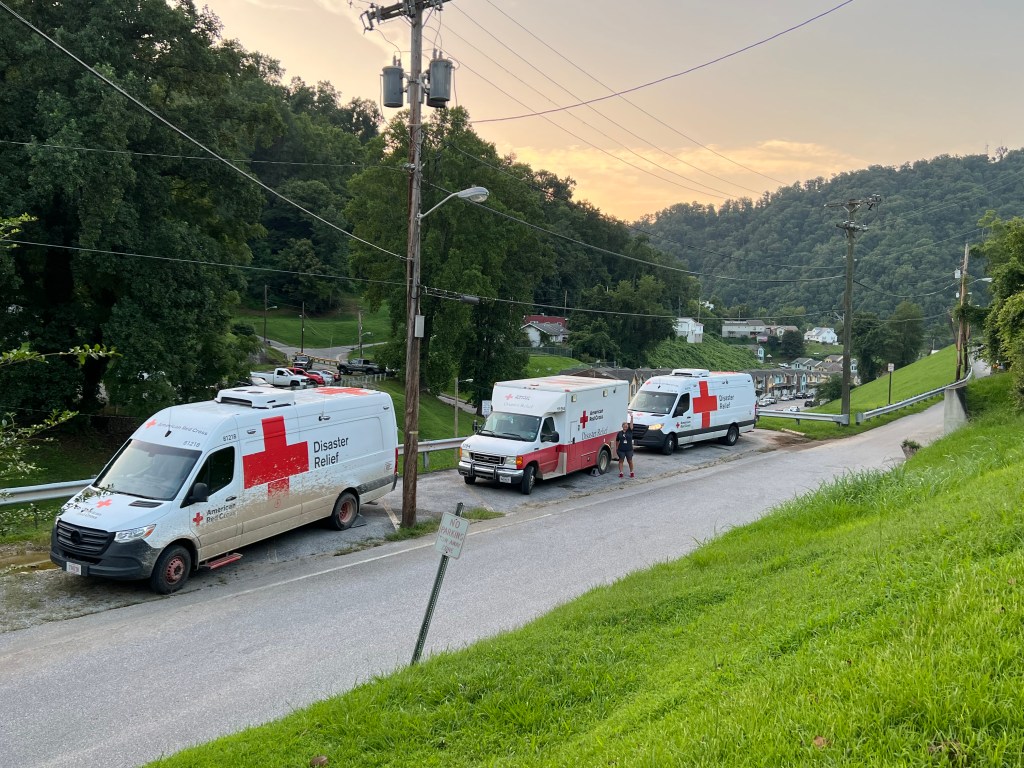
Three ERVs deployed to Kentucky for the 2022 flood.

Under Mass Care, we also do distribution of emergency supplies where we deliver clean-up supplies to communities where the houses can be salvaged, and we offer reunification support to the local communities. Mass Care is just one group of activities the Red Cross performs on a disaster relief operation, but it is the first line of response and arguably the most important.

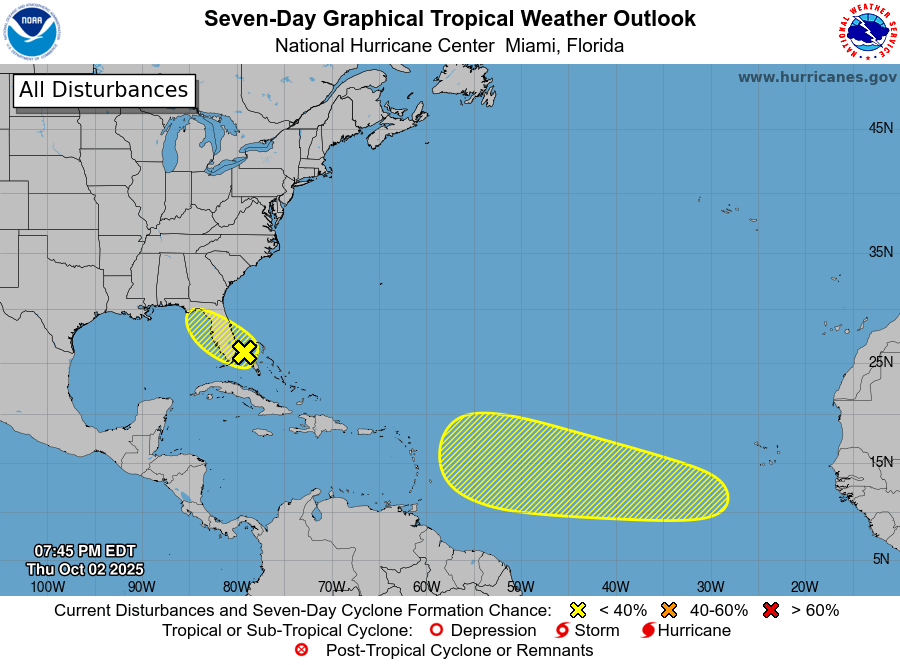
With Humberto safely out at sea and Imelda changing paths, we were able to stand down the disaster responders we had on standby last week. It was a huge relief that Imelda changed course and pulled away from the East Coast, and the efforts we made last week to respond were in no way wasted. In fact, I believe our preparedness activities last week were a great practice for when the next storm forms. #2025HurricaneSeason doesn’t end till November 30, and there are already two new disturbances in the Atlantic. One has a 10% chance of formation in the next seven days, and the other has a 20% chance.

My point is, we’re far from out of the woods this season. And when hurricane season ends, we will deal with winter storms, followed by spring flooding. Tornado season begins April 1, and then June 1, we’re back to hurricane season again. Meanwhile, wildfire season is no longer confined to a season.

If you take nothing else away from this info, please consider the following:

1) Tell all your friends about what we do in Disaster Cycle Services so everyone knows the Red Cross is more than just blood donations (it’s also training services and services to the Armed Forces!), and

2) Consider becoming a Red Cross volunteer. Even if you can’t deploy nationally, disasters happen at home too, where we also respond to house fires and install free smoke alarms, among other activities. You can visit www.redcross.org for more information.

Special THANK YOU to the Central Appalachia Region Disaster Workforce Engagement/Deployment Team for all their ongoing hard work: Vickie, Brenda, Jerin, Holly, Lori, and Janetta. We couldn’t do this important work without you! #SleevesUpHeartsOpenAllIn


Recommended Song for This Week: “God Did It” by Micah Tyler

“And there’s only One who’s getting all of the credit. God did it.”