
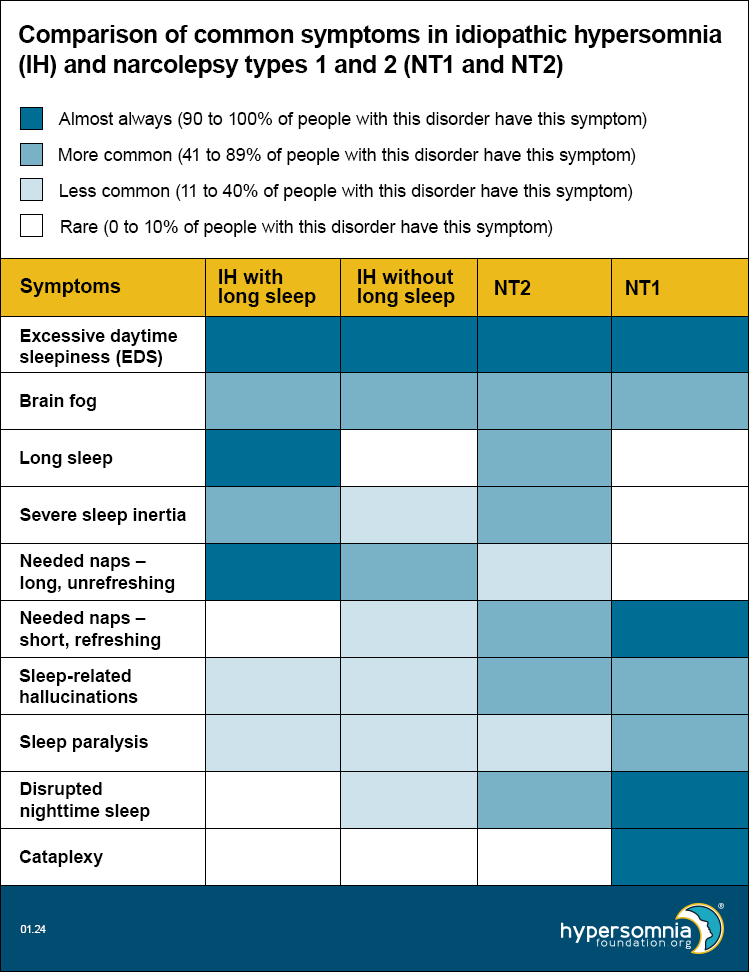
Blogger’s Note: In December 2025, I was approved to participate in the ALKS 2680 Vibrance-3 clinical trial for Idiopathic Hypersomnia. IH is a rare neurological sleep disorder similar to Narcolepsy that is just now getting the research attention it deserves. If you have IH or you have a loved one with IH, feel free to follow along here and on my Facebook page, Little Did She Know. To learn more about the clinical trial, visit ClinicalTrials.gov.
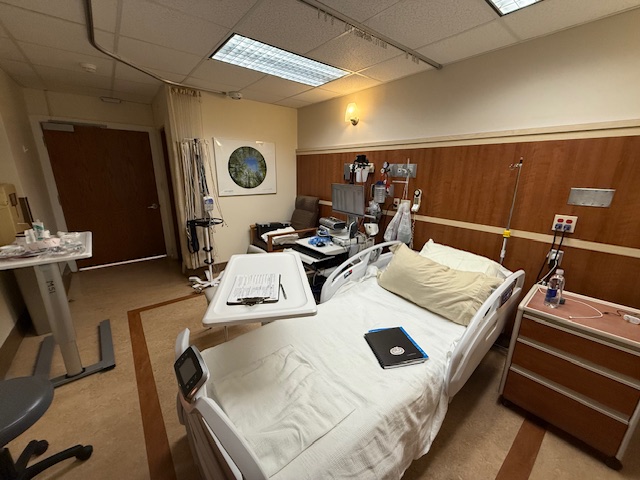
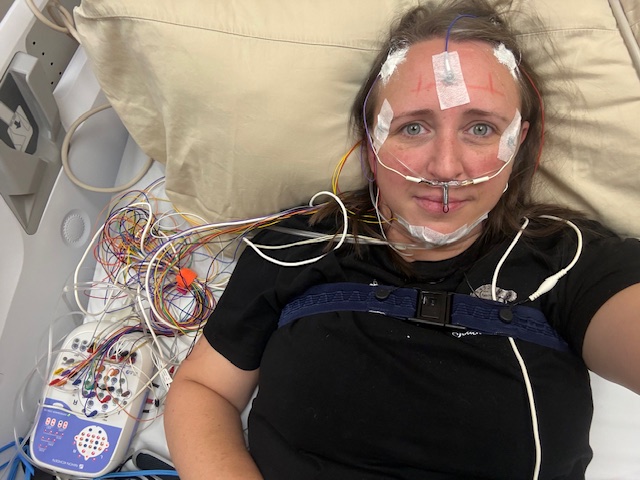
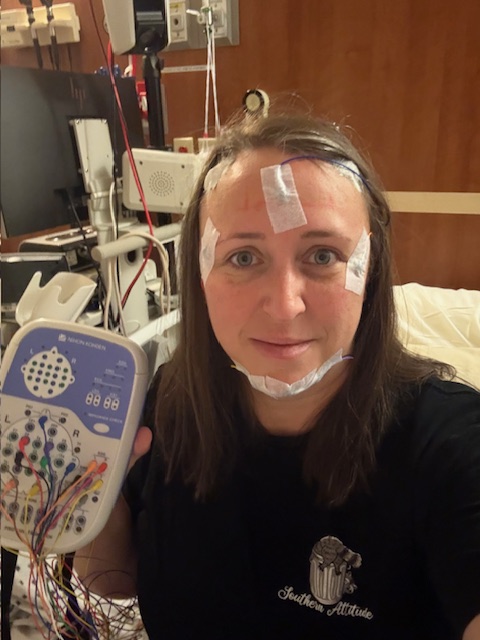
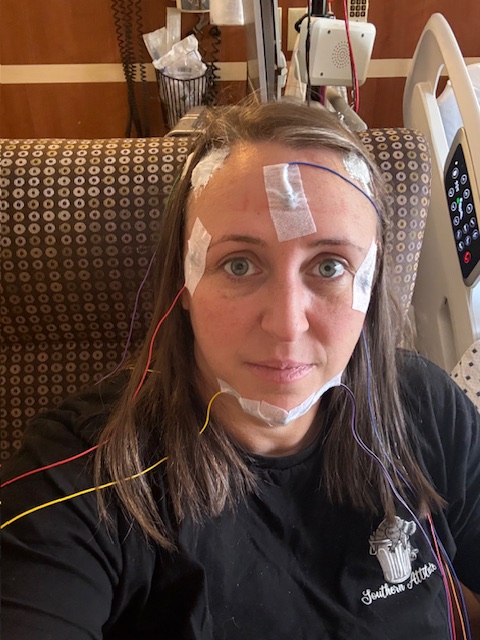
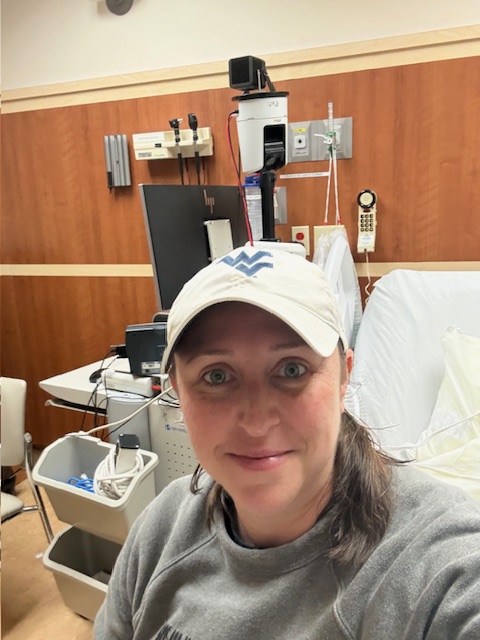
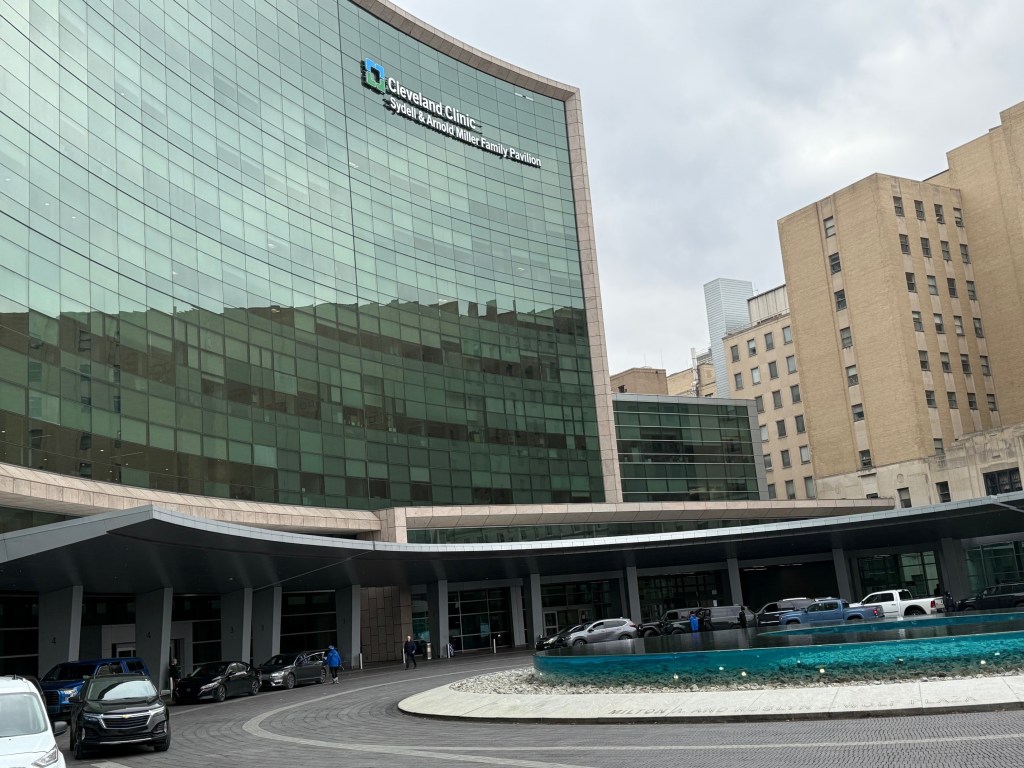
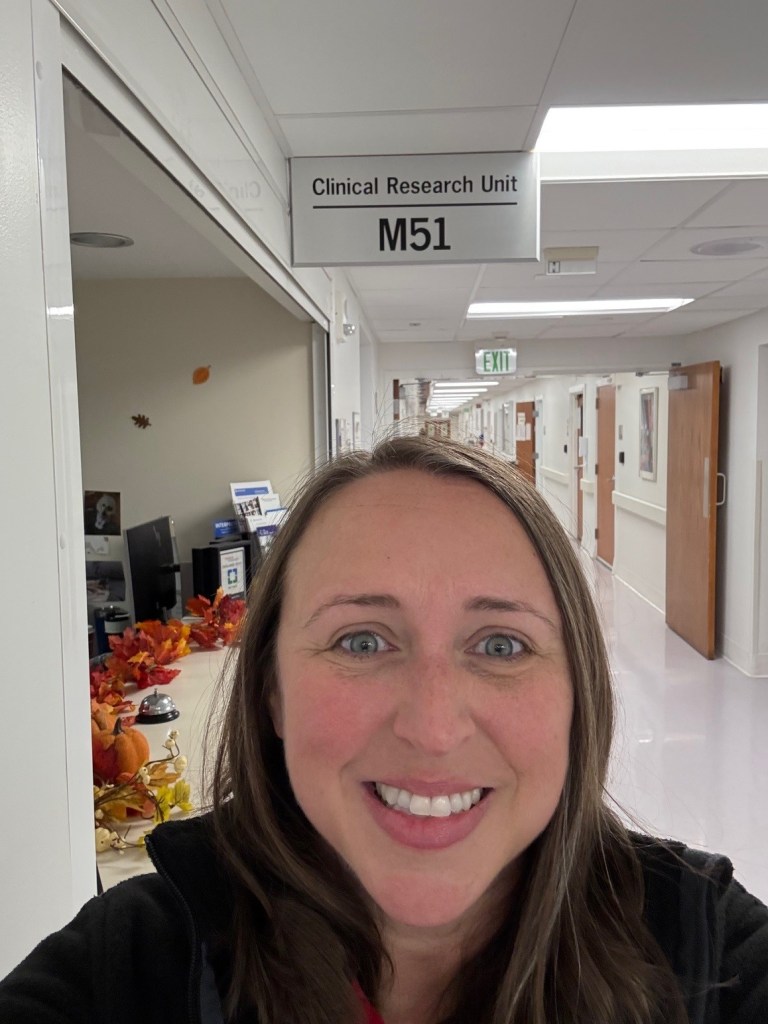
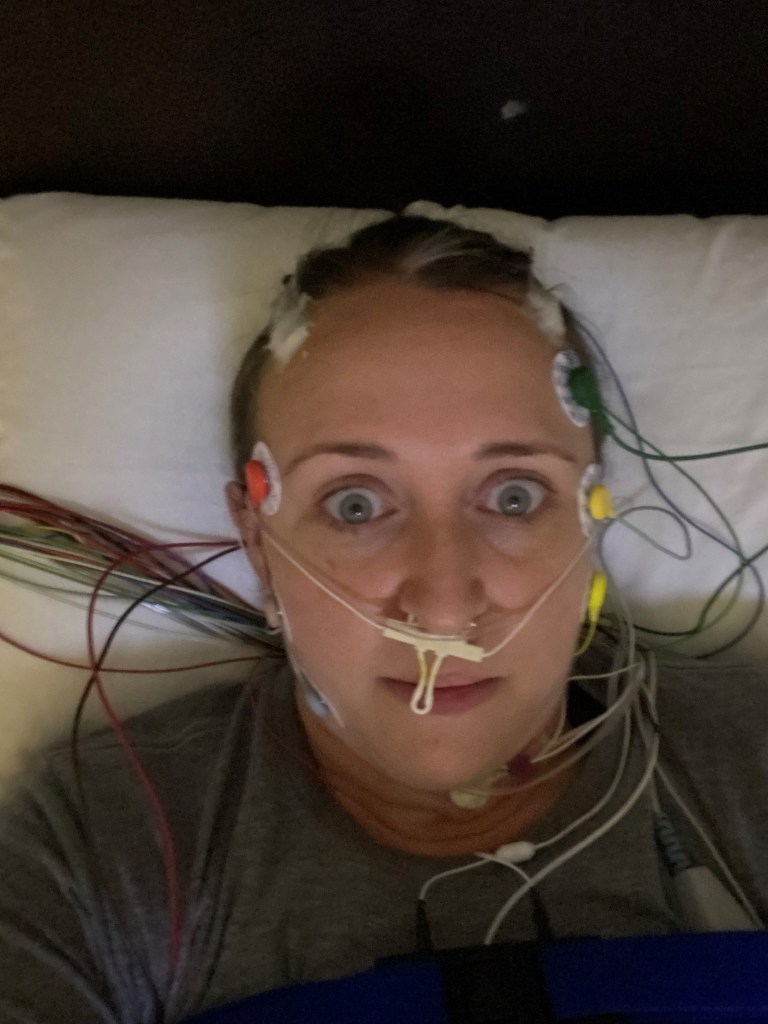
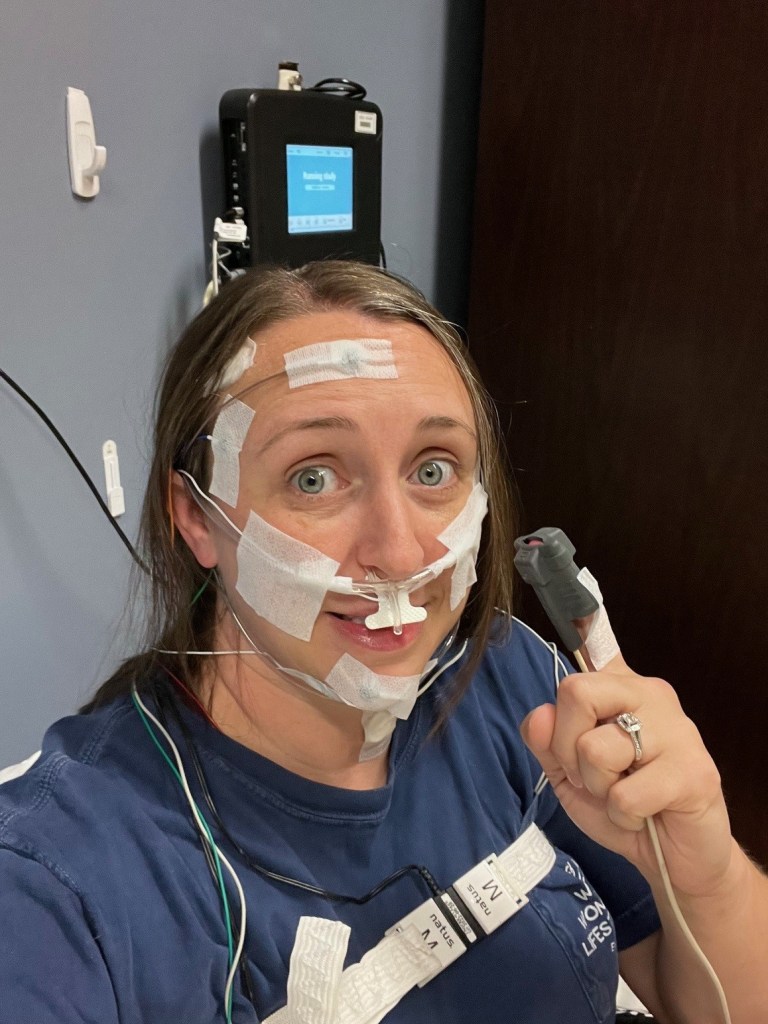
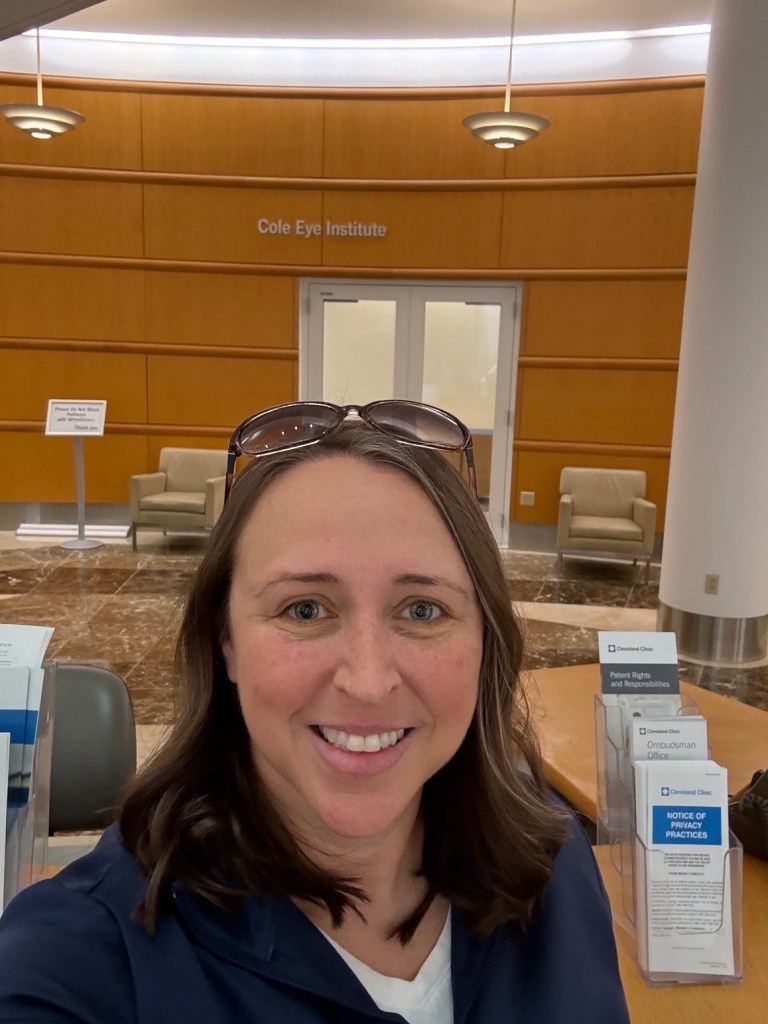
If you read my last post, “Nearing the Starting Line for ALKS 2680 Vibrance-3,” you already know I traveled to the Cleveland Clinic on December 29th to complete the approval process for my participation in this study by undergoing a polysomnography (PSG) that night and a maintenance of wakefulness test (MWT) all day on December 30th. Bright and early on December 31st, I got my first dose of the trial drug.
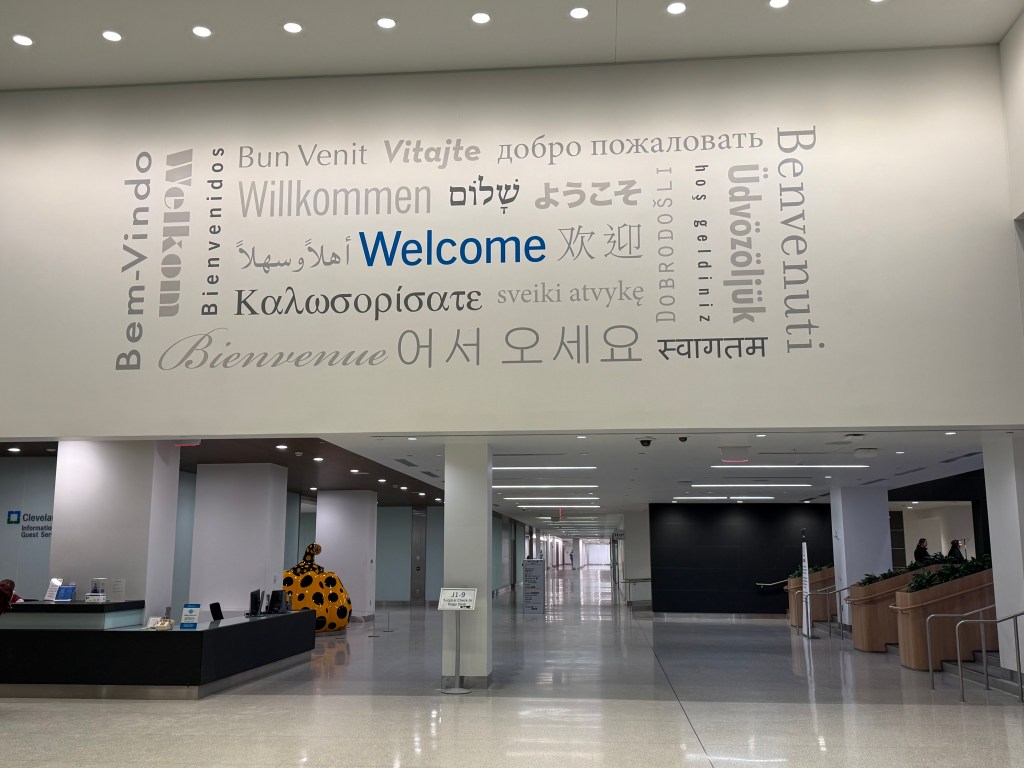
Main Campus
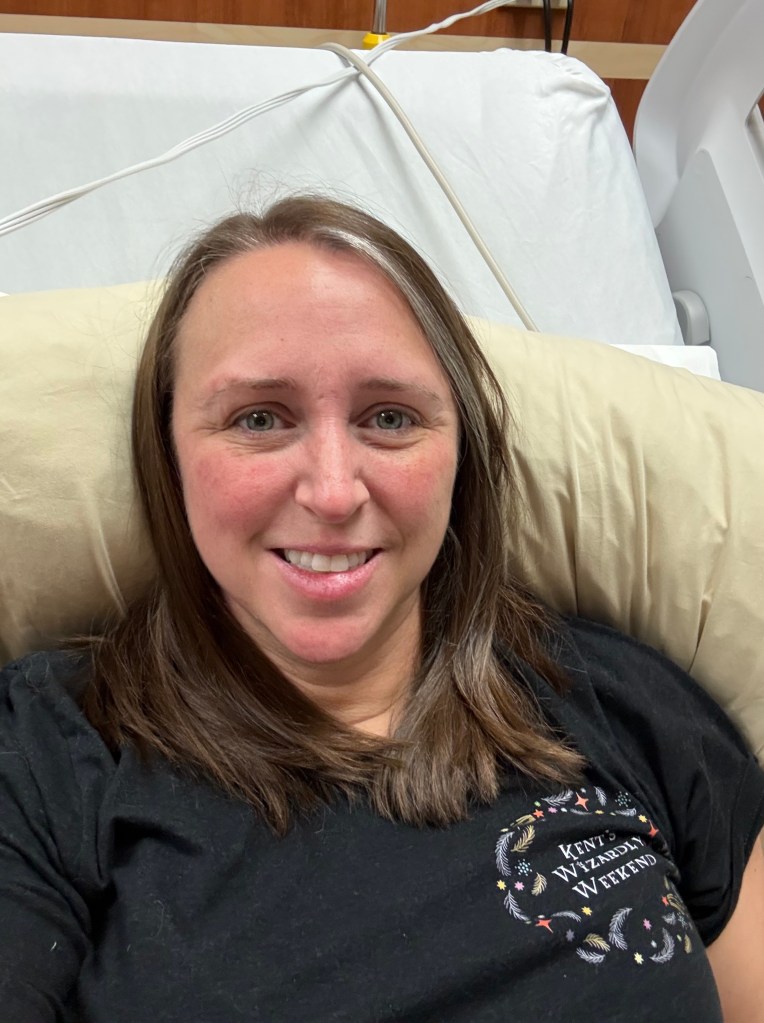
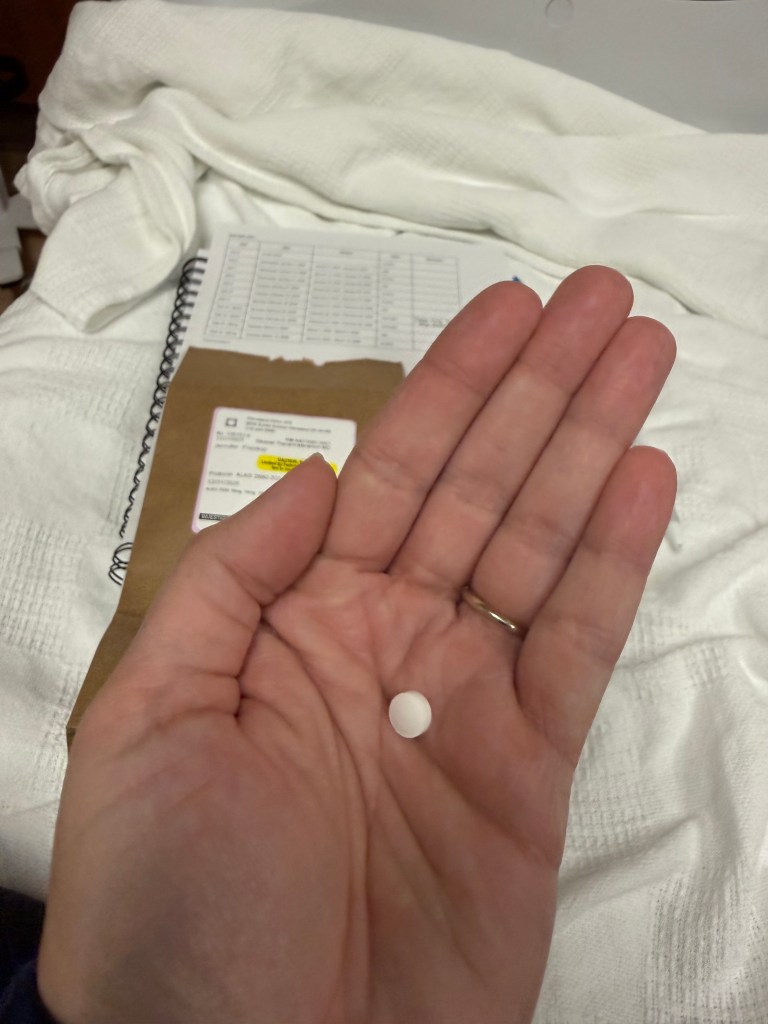
First, I want to share the listed side effects for Vibrance-3:
- Dizziness or feeling of lightheadedness
- Frequent urination or urinary incontinence
- Difficulties with sleep (difficulties falling asleep or interrupted night sleep)
- Hypervigilance (increased awareness or feeling more alert), feeling jittery
- Temporary visual changes (such as seeing things blurry or distorted, or increased sensitivity to light)
- Headache
- Increased blood pressure or heart rate
- Euphoric mood, feeling relaxed
- Increased saliva
- Decreased appetite
- Nausea (feeling sick to your stomach)
- Hot flush (feeling hot)
- Cold sweats or increased sweating
The frequent/urgent urination side effect was the first one to show up. Within 30 minutes of taking the first dose, I suddenly had to pee – like, right then. About an hour after I took the first dose, I went down to the lobby to meet my Lyft driver to go to the airport and start home. Once downstairs, I felt dizzy and short of breath. As I got in the Lyft ride, the nausea began.
I want to pause here and give a shout out to my Lyft driver, Elijah, who carried the conversation all the way to the airport and helped take my mind off the nausea. More importantly, when we got to the airport, he asked if he could pray for me. It was a heartfelt prayer after the long conversation we had about God and faith, and I will never forget when he prayed, “Dear Heavenly Father, I lift up to You Your beloved Jennifer….” That was a really impactful moment for me. I’ve never thought about myself that way when thinking about my relationship with God, but it’s true. We are all Papa God’s beloved children.
By the time I made it through security at the airport, I was sweating, nauseous, and dizzy, and I had upper arm muscle weakness and hand trembling. I was rueing the day I ever got that Idiopathic Hypersomnia diagnosis. (That rueing part happens every now and then.) I remember putting my shoes back on (because I missed the sign for the TSA Pre-Check line) and thinking, if I had never had that diagnosis, I could have just gone on oblivious and carrying the guilt of thinking I was lazy. At that moment, that felt like a better option than experimental drugs because if you know me, you know I’d rather go through just about anything other than nausea.
When I got to my gate, I added leg tremors to the list. It was like all these physiological responses were stacking up against me. By the time I made it back to Yeager Airport in Charleston, WV, that evening, I had already quit the study in my head three times. Clearly that was an emotional response only because I am still in the study.
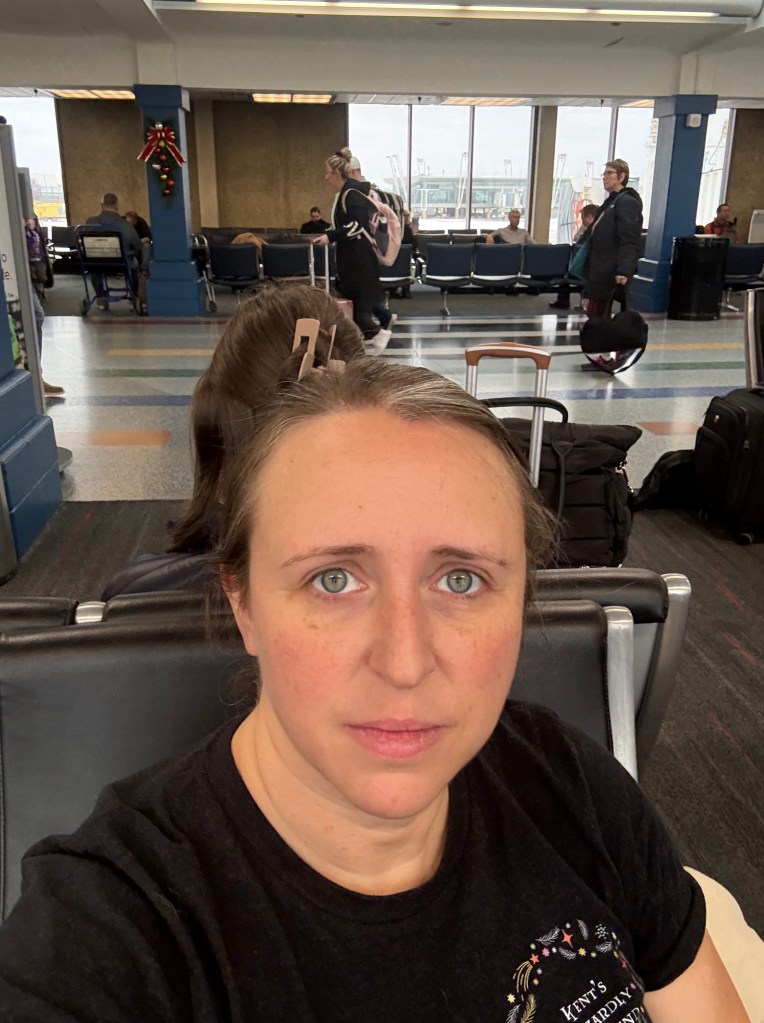
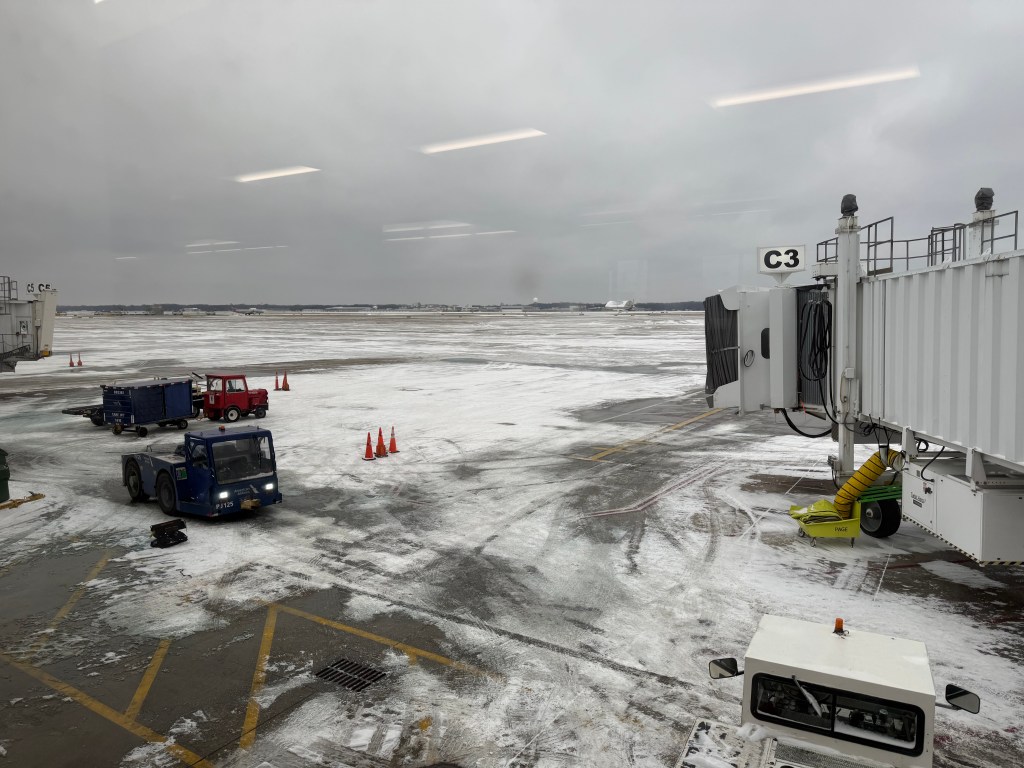
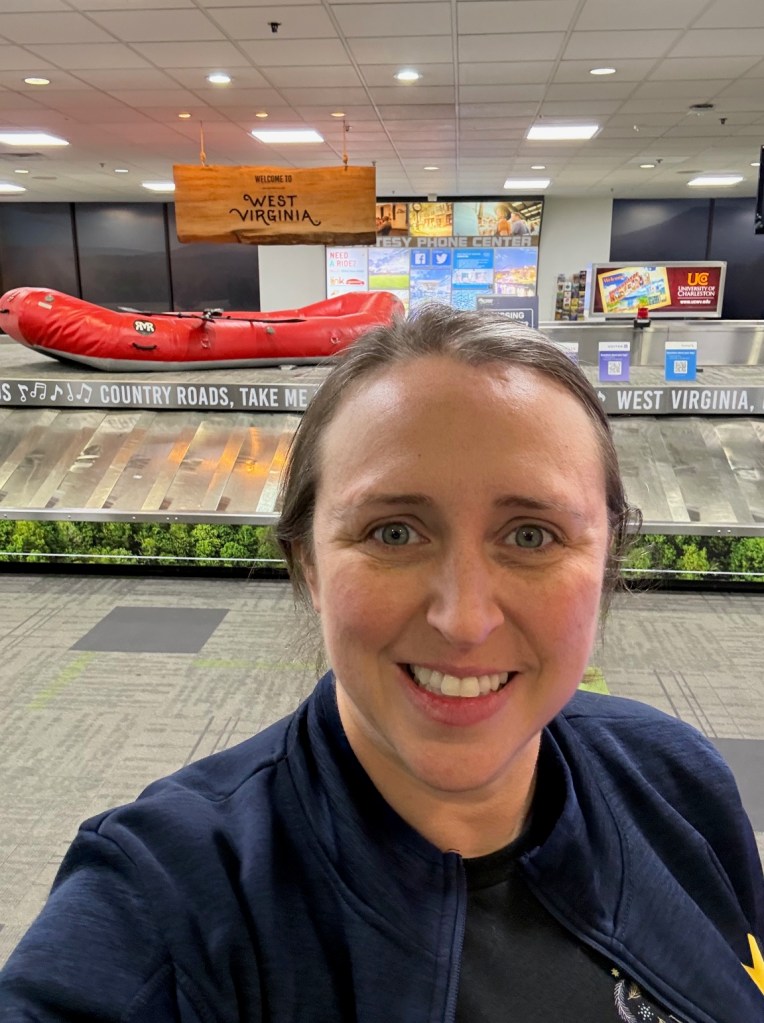
in WV.
The next day – day two – the nausea and mild dizziness continued, as well as the random hot flashes and sweating. Bruxism – grinding teeth or clenching jaws – was another side effect not expected but in full effect.That was the day I first experienced the weird vision changes. It scared the crap out of me. Suddenly, it was like there was a shadow over my vision. When I closed my eyes, I could see glowing crescent moon shapes. That was the fourth time I told myself I was quitting the study. (Again, clearly I didn’t really quit.) Within about an hour and a half to two hours, my vision was back to normal, and the nausea was subsiding for the day.
The dizziness lasted probably about three days, and the nausea and sweating lasted about five days. The vision thing has happened randomly three times, all on different days. The sudden urge to pee remains, but it doesn’t happen that often and isn’t a big deal. I also noticed leg cramps when waking up a couple of mornings in the first week, as well as dry mouth. The bruxism is ongoing but seems to be mild now.
What I have not experienced from this study is a “euphoric mood, feeling relaxed,” which is listed above as a possible side effect. I’ve actually been pretty irritable for the last two weeks. I think part of that is because of the unexpected and negative impact it has had on my sleep.
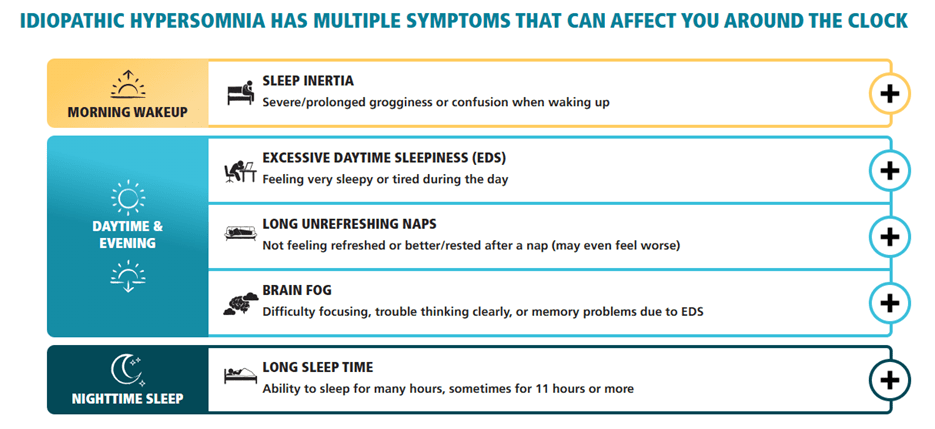
That’s rights, friends: the drug that is supposed to help with my excessive daytime sleepiness (EDS) is causing even more poor quality sleep at night than I already had. (My nighttime sleep issues are attributed to a secondary diagnosis of delayed sleep tendency due to an abnormal circadian rhythm.)
Generally, I now fall asleep at bedtime for about an hour and then wake up, and I’m usually awake for an hour. I also wake up frequently at night, some nights as many times as every hour. Sometimes I wake up and am unable to go back to sleep, so I get up for an hour – or three – then go back to bed. I get up every morning at 7am to take my dose, and I got back to bed at least until 8am. I initially started doing this with the hope I could sleep through some of the side effects, and that seemed to help. I also do this because, well, sleep disorder, sleep inertia and never waking up refreshed. Once I hit the 8am, though, the other really odd impact of this drug comes into play.
Are you ready for this?
With worse sleep at night and no relief yet from sleep inertia or EDS, when I do lie down to take a nap during the day, most of the time I can’t go to sleep. I literally lie there, so close to sleep, and it’s like there’s a cinderblock wall stopping me from going under. It is so frustrating. Naps don’t refresh or fix the problem, but there is a relief in at least falling asleep and giving my body what it wants. Not on Vibrance-3. At least not in weeks 1-3.
I think it’s fair to say the jury is still out on Vibrance-3 for me. And it should be. I’m only at the beginning of Week 3 of the 8-week trial. And we all know it can take 8 weeks, sometimes longer, for certain medications to work. If you’re on an anti-depressant or anti-anxiety med (like me), you’ve heard your doctor say this before.
So, here’s what I’ve observed about me on Vibrance-3:
I still have sleep inertia. Wednesday morning, it might have been a shocking, record-breaking 10 minutes. This morning, it was two hours.
I still get the heavy IH feeling that, in my opinion, is easily confused for depression.
I still have EDS and feel the need to take naps during the day, but not every day. Wednesday was a really good day. Thursday, however, was really bad, and today, was mediocre.
I do find that I am not dying for a nap during the day like I was when I did the washout and was not on anything. But, again, falling asleep for a nap has become the new struggle.
One positive is that I pulled myself together enough last week (week 2) to restart Couch to 5k. I had enough wakefulness (despite yawning and feeling heavy) to go to the track at 4PM for three days in a row to exercise. Usually the draw of sleep is so strong by the afternoon that I’m lucky to get dinner made in the evening before I crash. I was able to break free of that pull and get some fresh air and exercise. (I have not been back this week, unfortunately.)
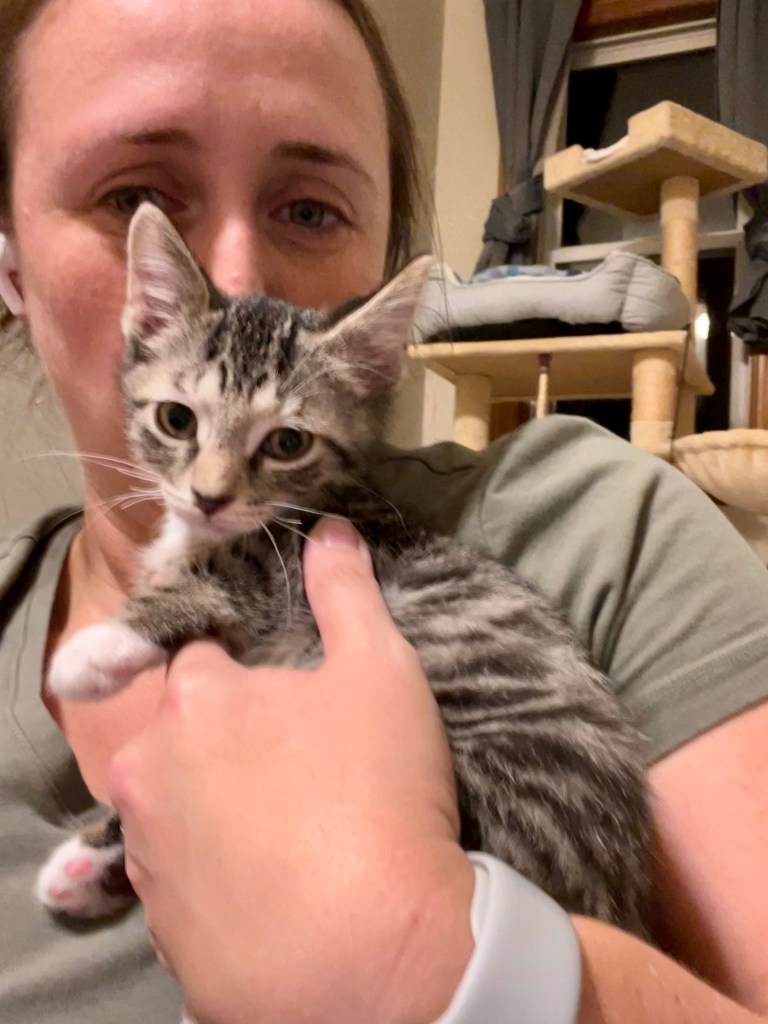
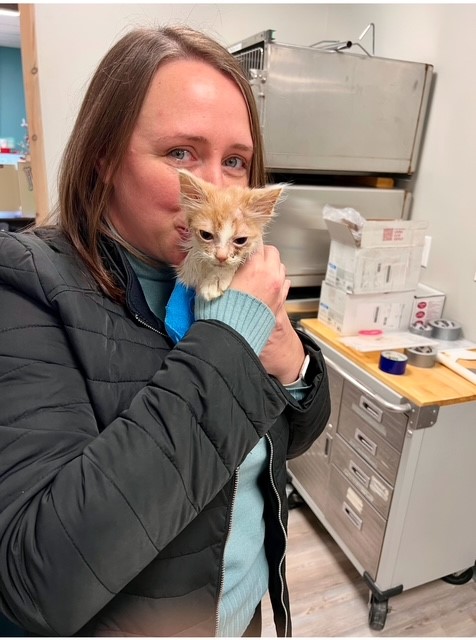
Given the time commitment of the trial and uncertainty of the drug’s effects, I had planned on taking another break from fostering kittens for a while. When a sick litter of four found their way to my Facebook page, though, I was able to scrounge up the energy to take them in. They were all sick, especially Junie who has calicivirus. They are all recovering now and will go to rescue in a couple of weeks. Honestly, I think I needed the distraction of them as much as they needed me. Sometimes commitment to others is the only thing that gets me up and moving. I hate to let people – or kittens – down.
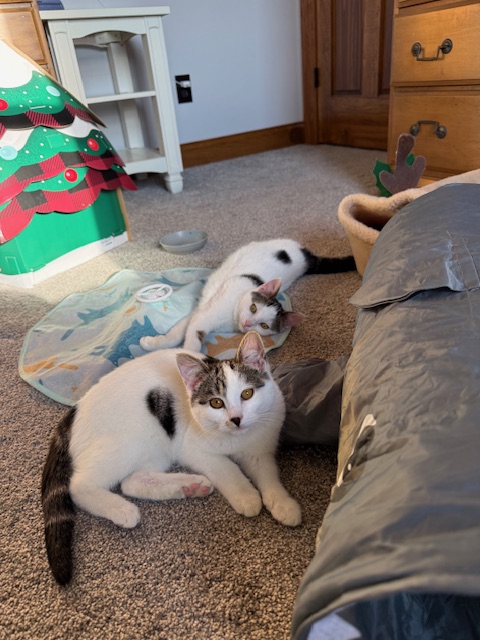
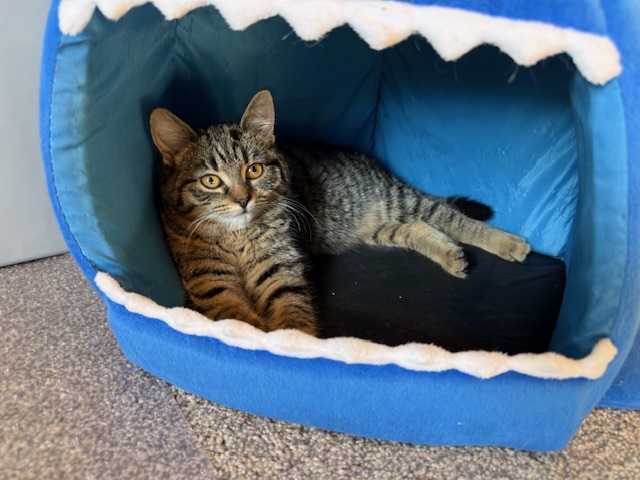
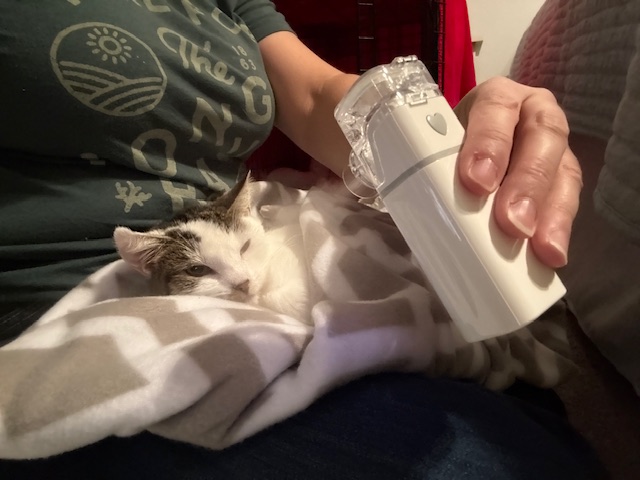
This is the #WhoCrew: (L-R) Max (back) and Wholihan; Cindy Lou Who; and sick little Junie, who was receiving nebulizer treatments twice a day until her symptoms improved. You can learn more about the #WhoCrew and our foster operation on Facebook under Weasley Meowtain Lodge.
So, what’s next in the trial? In about a week and a half, I go back and repeat the MWT and get my third batch of meds. Starting Monday, I’ll have to wear the actigraphy watch again for seven days, culminating in the MWT, and I’ll have to use the journal app to log my experience during that timeframe. At the end of the eight weeks, I’ll repeat the PSG and MWT as well as the eye exam.
If you’re wondering if I’ve thought about what I’ll do if this medication doesn’t work for me, I have. For a minute or two. And then I turned it over to Papa God and stopped worrying about it. Before I started this trial, I told God to do with it what He will. If He uses it to help me, I’ll be grateful and blessed. If He doesn’t use it to help me but He uses my data to help other IH patients, I’ll still be grateful and blessed. He’s carried me every day of my life, even all those years when I ignored Him. He won’t leave me now. And nothing is wasted with Papa God. Not illness. Not grief. Not heartache. Not frustration. Not even EDS.
Trust me, kid. I’ve got you.
In fact, if I’m being honest, I’m seeing Him open so many doors for me right now. At a time when I feel I’m at my weakest, He’s asking more of me. So, I’m stepping out in faith. I’m accepting the opportunities without thinking about how I’ll be able to deliver. Because Papa God doesn’t call the qualified. He calls us to be obedient, and He makes things happen when we show up. We’re just here to plant seeds. He does the rest. Remember what He did for me in hurricane season? Even the winds and waves obey him. (If you don’t know, check out “She’d See God Move Mountains.”
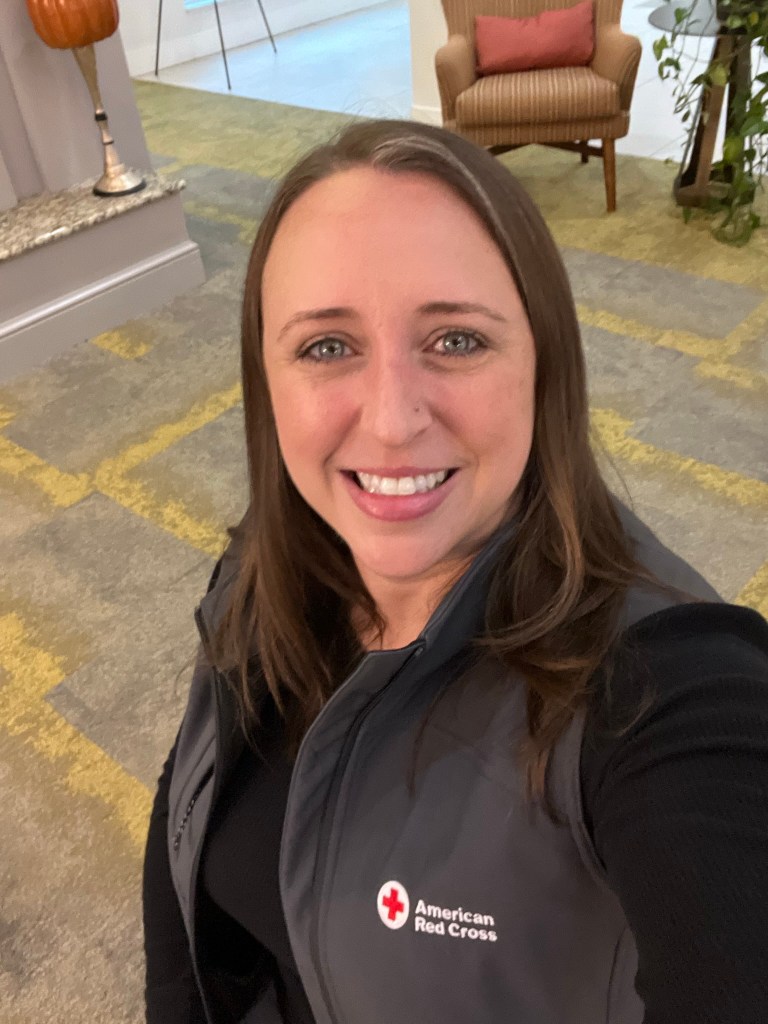
Besides, I’ve got things to do – like disaster response, cat rescue and volunteering – regardless of whether Vibrance-3 is for me.
Speaking of giving my problems and fears to God and letting Him handle it all, I have a few really good songs for you this week.
“Flowers” by Samantha Ebert
“So I brought it up in a desperate prayer. Lord, why are you keeping me here? Then He said to me, “Child, I’m planting seeds. I’m a good God and I have a good plan. So trust that I’m holding a watering can. And someday you’ll see that flowers grow in the valley.”
“Even If” by Mercy Me
“I know You’re able and I know You can Save through the fire with Your mighty hand, But even if You don’t, My hope is You alone. I know the sorrow, and I know the hurt Would all go away if You’d just say the word, But even if You don’t, My hope is You alone.”
“Firm Foundation” by Cody Carnes
“Christ is my firm foundation, The rock on which I stand When everything around me is shaken. I’ve never been more glad That I put my faith in Jesus, ‘Cause He’s never let me down. He’s faithful through generations. Oh, so why would He fail now? He won’t.”
Did you know I have a Spotify list for the songs I mention in my blog posts?
Look for Little Did She Know on Spotify and follow along!

 Little Did She Know