
This time last week, I was staring down Hurricane Humberto and the expected impact area of what would become Hurricane Imelda on the NOAA Hurricane Center website. For Florida, Georgia, North Carolina, South Carolina and Virginia, it would be summed up best by the catch phrase of my disaster coworker, Todd:
“It’s not great.”
In case you don’t watch the news or the weather, #HurricaneHumberto in the Atlantic is credited with pulling #HurricaneImelda away from the East Coast, preventing landfall that would have impacted multiple states. That’s not to say the Bahamas were not impacted or that those coastal states would not end up seeing impact from the storm by way of coastal flooding and dangerous waves, but it could have been a whole lot worse.
I smile and think of the conversations I had with God late last week about how awesome it would be if He diverted Imelda and prevented loss of life and loss of homes and businesses. So while Humberto gets the credit for derailing a disaster on the East Coast, I know the truth:
#GodDidIt
But answered prayers and miracles and those special conversations with #PapaGod will have to wait because that’s not what I want to share with you right now. What I want to share with you is what it looks like when the American Red Cross’ Disaster Cycle Services line of service prepares for hurricane landfall and pre-landfall deployment. Unfortunately, I think one of the Red Cross’ best kept secrets is Disaster Cycle Services. So, I’m going to let you in on this secret with the hope that word will get out and more people will want to join this diverse band of humanitarians and help those in need alongside of us.
Every morning, Disaster Cycle Services team members from all over the U.S. get on a sync call with our national disaster leadership to discuss potential threats and current humanitarian responses. Early last week, conversations were being held about Hurricane Humberto and what would become Hurricane Imelda. From what I understand, hurricanes can spin up and strengthen very quickly due to the warm temperatures of the Atlantic Ocean. It’s hard to know a week out if and how a disturbance will develop, but Invest 94L – which would become Imelda – had us in full-on preparedness mode.
Note: According to The Weather Channel, “An invest – short for ‘investigation’ – is a naming convention used by the National Hurricane Center (NHC) to identify features they are monitoring for potential future development into a tropical depression or storm.”
This was the type of image that had me worried last week: (Credit: Accuweather on 9/26):
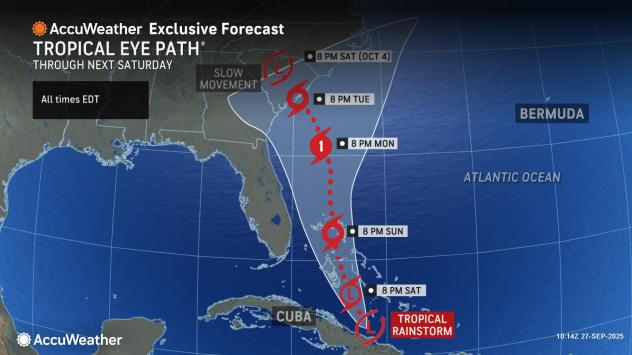
By Thursday of last week, the American Red Cross had five disaster operations standing up ahead of Imelda’s anticipated landfall – Florida, Georgia, North Carolina, South Carolina and Virginia – and the Disaster Workforce Engagement Teams in regions all over the U.S. were working on putting trained Red Cross disaster responders on standby for pre-landfall deployment to travel ahead of the storm and prepare for impact.
Rabbit Trail: I am the Disaster Workforce Engagement Manager (DWEM) for Central Appalachia Region (CAR). CAR is compromised of all 55 West Virginia counties and 22 counties in the border states of Kentucky, Ohio, Virginia and Maryland. One of my responsibilities as DWEM is having a national disaster deployment team in place and a deployment plan ready to respond to whatever happens, whenever it might happen.
Pre-landfall deployment is exactly what it sounds like: we send trained disaster responders to the regions where impact is expected by a major storm. We mobilize our workforce before any travel stops are caused by incoming bad weather so we can prep evacuation shelters and get our resources in place. When the preparedness tasks are done, the responders hunker down and wait out the storm. Once the storm passes, the needs of the area are assessed with local community partners, and our Red Cross workforce begins delivering the mission of help and hope.
The work of the Disaster Workforce Engagement/Deployment Team never stops – we are always in a posture of preparedness for response. This is so that if a disaster occurs at any time, we are ready to mobilize disaster responders to impacted communities. With pre-landfall preparedness, we check the availability of all of our trained responders, and if they are able to deploy, we put them on alert or standby.
When the Deployment Team gets the go to mobilize any responders who are on alert, we confirm those responders can leave by the next morning and go over the assignment location and hardship codes with them. Hardship codes are any challenges the volunteer might face on that assignment, like no electricity, no running water, travel difficulties, and no immediate access to health care.
The Deployment Team members provide as much info as we can to our responders so they can make an educated decision about whether the deployment opportunity is right for them. If they agree to go, we instruct them on next steps, like finishing their pre-assignment health questionnaire (responders must be healthy and physically able to deploy) and booking their travel through the Red Cross’ travel agency. In Central Appalachia, every responder who deploys is assigned a deployment buddy. A deployment buddy is someone from the Deployment Team who has experience with deployment and is able to answer questions and give the responder guidance as they travel to the disaster relief operation and while they are deployed for two weeks.
So, what do American Red Cross disaster responders do in disaster-impacted communities when they deploy? To answer that, I want to circle back to the name of our line of service. We are Disaster Cycle Services because there is a cycle to what we do. We prepare (ourselves, our responders and our communities) for disaster, we respond to disaster (“boots on the ground”), and we help clients recover (get to their new normal).
Disaster Fact: A disaster can be a tornado, flood, volcanic eruption, hurricane, earthquake, train derailment, mass casualty incident, or even a man-made disaster.
Our initial goal in disaster response is to make sure people have the essentials: food, water, and a safe place to stay. We call this #MassCare. One of the very first things we do for a disaster operation is set up shelters or support community shelters being opened. We serve meals in our shelters, and we also have our awesome Emergency Response Vehicles – ERVs – that drive around communities and hand out hot meals.
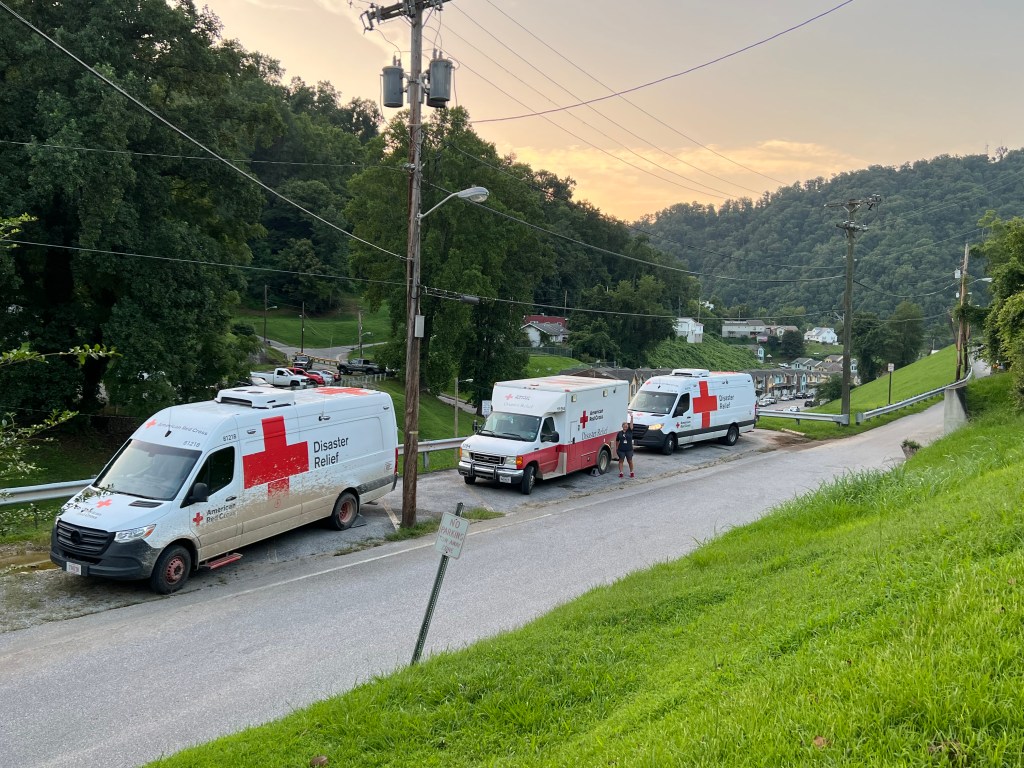
Under Mass Care, we also do distribution of emergency supplies where we deliver clean-up supplies to communities where the houses can be salvaged, and we offer reunification support to the local communities. Mass Care is just one group of activities the Red Cross performs on a disaster relief operation, but it is the first line of response and arguably the most important.
With Humberto safely out at sea and Imelda changing paths, we were able to stand down the disaster responders we had on standby last week. It was a huge relief that Imelda changed course and pulled away from the East Coast, and the efforts we made last week to respond were in no way wasted. In fact, I believe our preparedness activities last week were a great practice for when the next storm forms. #2025HurricaneSeason doesn’t end till November 30, and there are already two new disturbances in the Atlantic. One has a 10% chance of formation in the next seven days, and the other has a 20% chance.
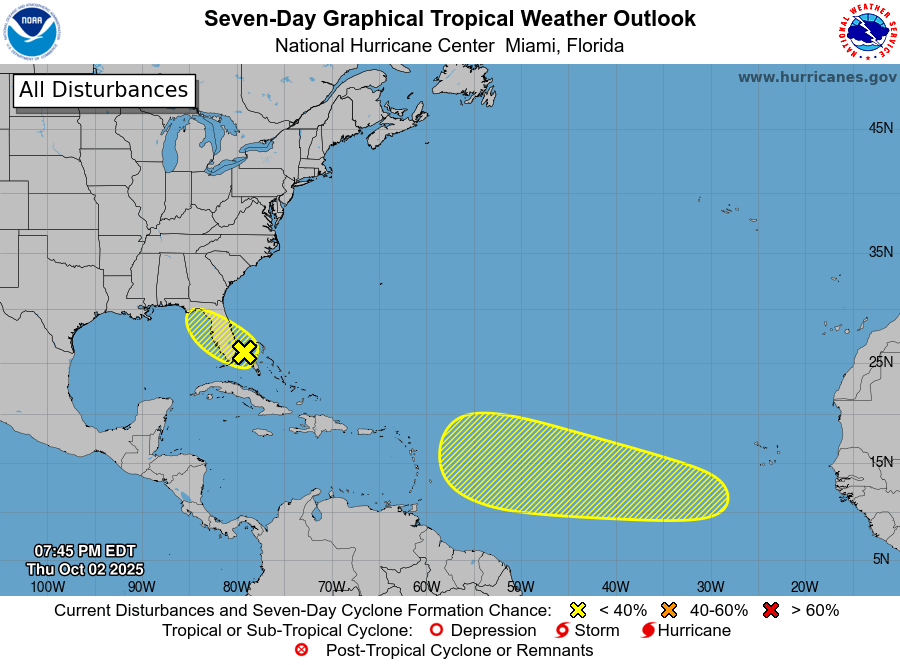
My point is, we’re far from out of the woods this season. And when hurricane season ends, we will deal with winter storms, followed by spring flooding. Tornado season begins April 1, and then June 1, we’re back to hurricane season again. Meanwhile, wildfire season is no longer confined to a season.
If you take nothing else away from this info, please consider the following:
1) Tell all your friends about what we do in Disaster Cycle Services so everyone knows the Red Cross is more than just blood donations (it’s also training services and services to the Armed Forces!), and
2) Consider becoming a Red Cross volunteer. Even if you can’t deploy nationally, disasters happen at home too, where we also respond to house fires and install free smoke alarms, among other activities. You can visit www.redcross.org for more information.
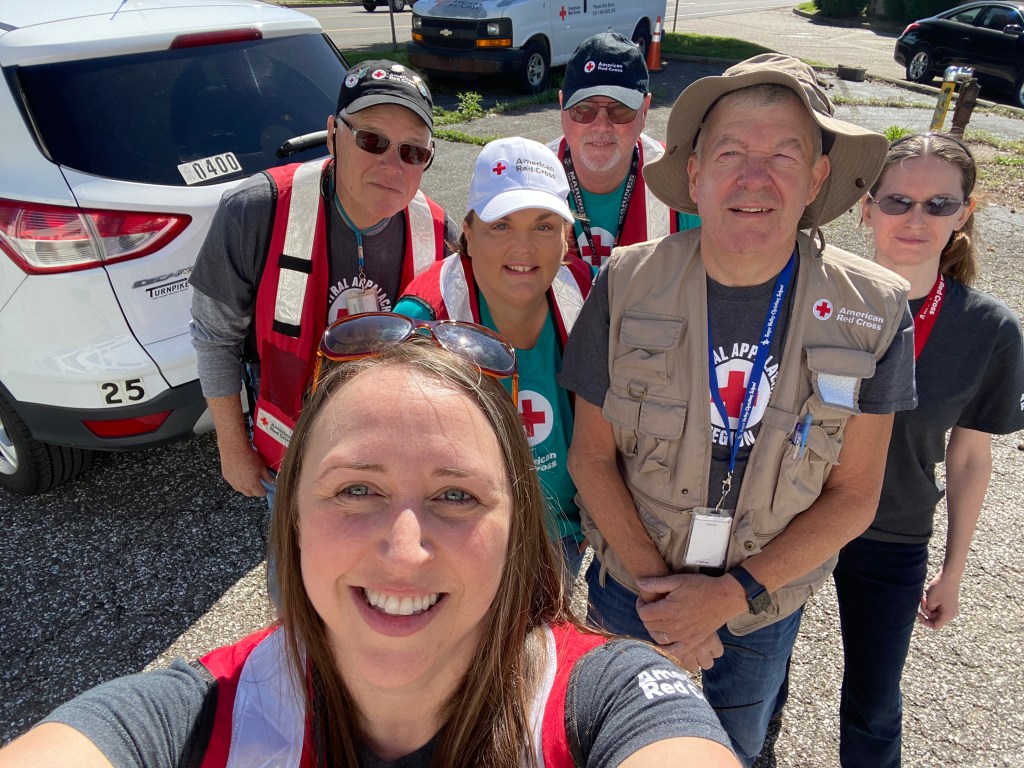
Special THANK YOU to the Central Appalachia Region Disaster Workforce Engagement/Deployment Team for all their ongoing hard work: Vickie, Brenda, Jerin, Holly, Lori, and Janetta. We couldn’t do this important work without you! #SleevesUpHeartsOpenAllIn
Recommended Song for This Week: “God Did It” by Micah Tyler
“And there’s only One who’s getting all of the credit. God did it.”
 Little Did She Know